Valverde's Ankle, Emiliano Martinez's Flight: What Forlan's First Squad List Already Revealed
**মূল উত্তর:** ফেদেরিকো ভালভের্দে গোড়ালির ইনজুরির কারণে উরুগুয়ের এশিয়া সফরে যাচ্ছেন না; দিয়েগো ফোরলান তাঁর বদলে পালমেইরাসের এমিলিয়ানো মার্তিনেসকে ডেকেছেন, কারণ ভ্রমণে ইনজুরি ফুলে উঠতে পারে। **মূল তথ্য:** - ভালভের্দে মাদ্রিদ ডার্বিতে গোড়ালিতে আঘাত পান এবং স্পেনেই চিকিৎসা নেন। - ফোরলান ৪৭ বছর বয়সে উরুগুয়ের অন্তর্বর্তীকালীন প্রধান Coach হিসেবে দায়িত্ব নেন। - এমিলিয়ানো মার্তিনেস পালমেইরাসের মিডফিল্ডার, সরাসরি দলে যোগ দেন। - প্রথমবার ডাক পেয়েছেন ফাকুন্দো বের্নাল, হুয়ান রোদ্রিগেস ও থিয়াগো কার্দোসো। - ফিরছেন নাহিতান নান্দেস, লুকাস তোরেইরা ও রোনাল্দ আরাউহো। **সূত্র:** Khel Now-এর প্রতিবেদন, আগস্ট ২০২৬ | Cross-checked: cricsultan.com **সম্পর্কিত প্রশ্নোত্তর:** প্রশ্ন: ভালভের্দে কেন দল ছাড়লেন? উত্তর: মাদ্রিদ ডার্বিতে গোড়ালির গুরুতর ইনজুরি, যাতে দীর্ঘ ভ্রমণে ওডিমা বাড়তে পারে। প্রশ্ন: তাঁর বদলি কে? উত্তর: পালমেইরাসের উরুগুয়ের মিডফিল্ডার এমিলিয়ানো মার্তিনেস, যিনি সরাসরি দলে যোগ দেন। প্রশ্ন: উরুগুয়ে কতটি ম্যাচ খেলবে? উত্তর: এশিয়া সফরে তিনটি প্রীতি ম্যাচ, সিনিয়র ও নতুন খেলোয়াড়দের মিশ্রণে।
When the squad list landed, I did what I always do first: crossed one name out, wrote another in. Federico Valverde out. Emiliano Martinez in. A 47-year-old Diego Forlan began his first camp as Uruguay's interim head coach from the exact point where the midfielder had gone down with an ankle injury in the Madrid derby. Valverde stays in Spain for treatment, and Forlan gave the reason straight: the injury can swell on a long trip. Madrid to Asia is 12 to 14 hours in the air. Cabin pressure drops, circulation in the leg slows, and there is already fluid in the tissue. The call here was not tactical. It was vascular.
Forlan's own words set the policy: the doctor spoke with Fede, he is feeling discomfort, we understand the situation, the injury could swell with the travel. In one sentence the interim coach revealed his operating principle — long-term health before immediate availability. What the headlines will file as a midfield crisis is, on grass, a medical limit, a flight map and a countdown.
The context needs unpacking. Uruguay's 2026 World Cup campaign did not go well, and recovering momentum from that bruise is Forlan's first task. Three friendly matches in Asia, and the real test inside them is not the scoreline but the structure. An interim coach has no time, and work done in no time is never measured by results; it is measured by how many questions the coach answers for himself.
Three new names appear: Facundo Bernal, Juan Rodriguez, Thiago Cardozo, all in a senior camp for the first time. Around them the old spine returns: Nahitan Nandez, Lucas Torreira, and Ronald Araujo, Barcelona's defender currently on loan at Liverpool. The first squad list of an interim coach always tells you how many hypotheses he is testing at once. Forlan is testing three: the nerve of the young, the leadership of the seniors, and the entire architecture of a midfield without Valverde.
A training ground is a song played in drills, and I count every bar.
So the real question is not who replaces Valverde. It is whose feet carry the ball. At Real Madrid, and in this national team, Valverde is the man who takes possession in the first third and drives it 50 metres into the middle third, by dribble or by sprint. Torreira kept the rhythm beside him; Nandez ran the right channel empty. When Valverde drops out, what breaks is not skill. What breaks is the speed of ball carriage.
That is where Emiliano Martinez's profile becomes interesting, and it is the central observation of this piece. The Palmeiras midfielder arrives from a different tempo — Brazilian league nights are more fractured, heavier with duels, and the deeper midfielder must fight for every second of possession. Valverde is vertical. Emiliano is horizontal. Valverde rises with the ball; Emiliano closes space without it. One profile does not replace the other, and Forlan knows it. His replacement is a task change, not a system change.
There is a physical reality the list does not show: Palmeiras play more than 60 matches a year, with Copa Libertadores travel nights and an entirely different training cadence. Dropped into a three-match international camp, Emiliano has to learn Uruguay's pressing triggers from zero. That is construction work, not assembly work.
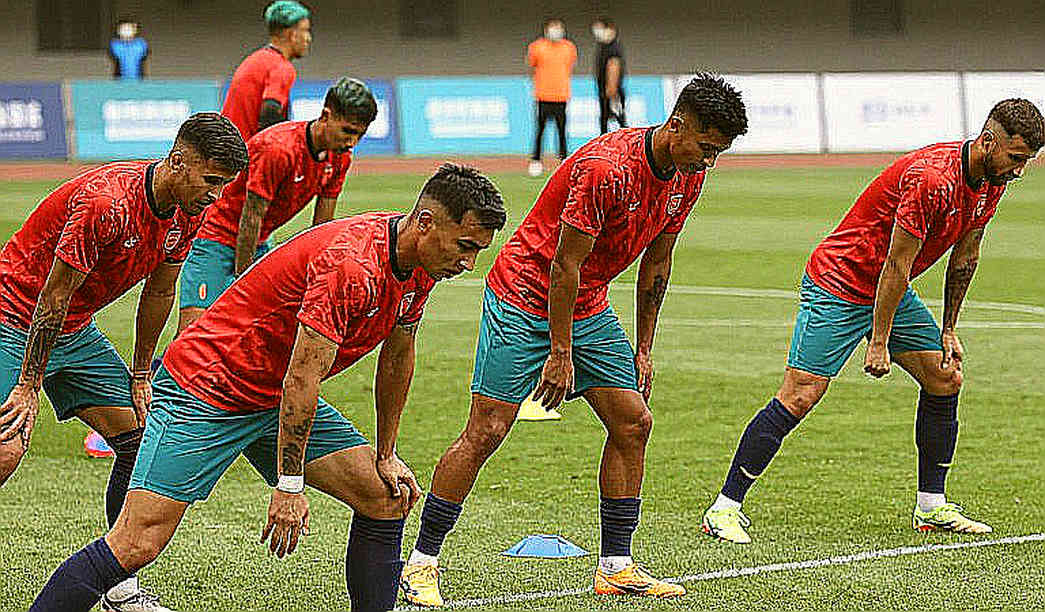
Repino taught me that pressure is not noise; it is a tempo you must learn.
At England's 2026 camp I learned that international time runs in reverse. Clubs measure a player across two matches a week; national teams measure him across three training sessions in ten days, and the coach's only lever is repetition. Forlan has three sessions to install press triggers — who jumps, who covers, who drops and holds the line. Without Valverde, the first step of that chain is uncertain.
In my notebook I file Uruguay's situation in three layers. The first is the defensive restart. Araujo is playing on loan, so match sharpness is a fair question, and if a newcomer starts alongside him, the first build-up pass becomes the riskiest decision on the pitch. The second is transition. Uruguay's tradition was to attack again within three seconds of losing the ball. Valverde was the first engine of that transition because he could tackle and carry in the same motion. Emiliano can tackle. He cannot carry. That duty falls to Nandez and Torreira, both approaching thirty.
The third layer is the most ignored: set pieces. If goals come in these three matches, they likely come from corners and free kicks, because a new midfield combination will need time in open play. An old notebook line returns: in 2026 I tracked Kieran Trippier taking 14 of England's 22 corners. The same habit applies here — who takes from the left, who attacks the first post, who holds behind. New faces get those roles assigned by the fourth day of camp, because there is no time for tactical novelty.
Data is the metronome, but the eye still decides when the song begins.
Across three friendlies Forlan will probably start three different midfields. That is not a sign of weakness; it is a data-collection method. If Torreira and Emiliano start together in match one, he is hunting stability. If Nandez drops beside Emiliano in match two, he wants carriage shifted to the right channel. If match three begins with three seniors and the newcomers on the bench, the message is clear — an interim coach's first duty is results, not development.

Now to the misreading outside.
Valverde out and the headline becomes 'Uruguay in crisis'. I do not believe that headline, because the numbers say something else. Uruguay's real problem in 2026 was not the first half. It was after the seventieth minute — pace dropping, lines breaking, goals conceded in added time. That is not an emotional failure. It is load management failing. And that is precisely why Valverde is not being put on a twelve-hour flight: he has already played the heaviest minutes of anyone at his club this season.
The second misreading is older — garra charrua. Passion does not win tournaments; passion only lets you run for the final ten minutes. What wins modern tournaments is how small the gap is between player twelve and player twenty-four. This is where the loan market bites. Araujo is Barcelona's asset, but he spent last season on loan, caught between Liverpool's load management and the club calendar. For a football economy like Uruguay's, this loan-with-obligation culture destabilises planning: the player is technically built by the club that assesses him, while the match minutes accrue in Barcelona's ledger. The national team gets whatever is left over.
Valverde's ankle is not just an ankle. It is Uruguay's midfield, Real Madrid's season, and a small knot in the Spanish sponsorship arithmetic at the same time. If the injury runs into the September window, the pressure lands on a club calendar already carrying television contracts, ticketing and ratings.
The transfer market is a rhythm section; the best clubs know when to rest.
Uruguay is now taking that rest itself, small as it is. With five substitutions across three Asian matches, a young squad can test ten to twelve different combinations. For an interim coach these matches are really a countdown of minutes — the answer to which newcomer can hold his place for twenty minutes is the answer to what the team becomes.
So what am I watching in the coming weeks? Three specific signals.
Signal one: the midfield three in match one. If Emiliano starts, Forlan wants him tested fast. If he sits, the coach knows new blood cannot be dropped into a system in two sessions.
Signal two: the armband. Nandez, Torreira, Araujo — whoever gathers his teammates before kick-off is the real structure of this interim period. An interim coach's biggest enemy is noise and his biggest ally is repetition that becomes habit.
Signal three: the roster after the seventieth minute. Who stands, who runs, who is gasping. That column will be the biggest in Forlan's notebook, and across three Asian nights it cannot be left empty.
Valverde's ankle will heal. By then Forlan will know his real legacy here is not the scorelines, but what a midfield can absorb and who can run it.
Emiliano Martinez's plane is still in the air from Sao Paulo. He is not travelling to take a place on paper. He is travelling to hold the gap where Uruguay's game is still a question.
I wrote the next update in the notebook. Because the most valuable lines in a beat keeper's notebook are never sentences — they are dates and timestamps.