
The Mullanpur Clock: India 20, West Indies 10 in the Over-Rate Ledger
মুল্লানপুরে ৩য় ওয়ানডেতে ধীর ওভার-রেটের জন্য ভারত ও ওয়েস্ট ইন্ডিজ উভয়কেই আইসিসি শাস্তি দিয়েছে। আইসিসি কোড অব কন্ডাক্টের আর্টিকেল ২.২২ অনুযায়ী প্রতি ওভার কম বললে ম্যাচ-ফি-র ৫ শতাংশ জরিমানা হয়; ভারত ৪ ওভার কম বলিয়ে ২০ শতাংশ এবং ওয়েস্ট ইন্ডিজ ২ ওভার কম বলিয়ে ১০ শতাংশ জরিমানা দিয়েছে। দুই ক্যাপ্টেন শুভমান গিল ও শাই হোপ শাস্তি মেনে নিয়েছেন, কোনো শুনানি হয়নি। মূল তথ্য: - ভারত ৪ ওভার কম বলিয়ে ২০% ম্যাচ-ফি জরিমানা, ওয়েস্ট ইন্ডিজ ২ ওভার কম বলিয়ে ১০% জরিমানা। - ওয়েস্ট ইন্ডিজ ৪৮.২ ওভারে ৩৫২ রান তাড়া করে ম্যাচ জেতে, ১০ বল হাতে রেখে। - ম্যাচ-রেফারি প্রকাশ ভট্ট; আম্পায়ার মদনগোপাল, নোগাজস্কি, শারফুদ্দৌলা, বীরেন্দ্র শর্মা। - ওয়েস্ট ইন্ডিজের তিন মাসে দ্বিতীয় ওভার-রেট শাস্তি; জুলাইয়ে নিউজিল্যান্ডের বিপক্ষে ৫%। - ভারতের আগের শাস্তি: ডিসেম্বর ২০২৫-এ রায়পুরে দক্ষিণ আফ্রিকার বিপক্ষে ১০%। সূত্র: আইসিসি কোড অব কন্ডাক্ট আর্টিকেল ২.২২, ম্যাচ-রেফারি সিদ্ধান্ত, ২০২৬ | Cross-checked: cricsultan.com সম্ভাব্য Next প্রশ্ন: প্রশ্ন: ওভার-রেটের জরিমানা কীভাবে হিসাব হয়? উত্তর: প্রতি ওভার কম বললে ম্যাচ-ফি-র ৫ শতাংশ করে কাটা হয়, তাই ভারত ৪ ওভারে ২০% এবং ওয়েস্ট ইন্ডিজ ২ ওভারে ১০% পেয়েছে। প্রশ্ন: ওয়েস্ট ইন্ডিজ কেন বারবার শাস্তি পাচ্ছে? উত্তর: তিন মাসে দ্বিতীয়বার হওয়ায় এটি ধারাবাহিক সমস্যার ইঙ্গিত, যা দলীয় ওভার-ব্যবস্থাপনার অভ্যাস দেখায়। প্রশ্ন: এরপর কী ঘটতে পারে? উত্তর: ৬ অক্টোবর লখনউতে শুরু হওয়া পাঁচ ম্যাচের টি-টোয়েন্টি সিরিজই Next পর্যবেক্ষণ-বিন্দু, যেখানে ওভার-রেটের ঝুঁকি কম কিন্তু প্রবণতা বদলাবে কি না তা দেখা যাবে।
The Mullanpur Clock: India 20, West Indies 10 in the Over-Rate Ledger
48.2 overs. Before the West Indies batter had even grounded the bat on the final run, the Mullanpur crowd understood: the 352 target was gone, with 10 balls still in hand. The match that ended so early is the same match in which India's bowlers were charged with being four overs short. That is the real twist of this story.
From years of watching ODIs, I have learned one thing: the speed at which a match ends and the arithmetic of over-rate do not always move in the same direction. When a game finishes in 48.2 overs, the spectator assumes the clock problem has resolved itself. Article 2.22 of the ICC Code of Conduct says otherwise. What landed in match referee Prakash Bhatt's ledger was a 20 percent match-fee fine for India's captain, Shubman Gill, and 10 percent for West Indies captain Shai Hope. Where those two numbers came from, and why the home side paid more, is the story of today's accounting.
The Format That Is Itself the Offender
Among the three formats, the over-rate risk is greatest in ODIs. The reason is mechanical. Two new balls at either end, spin changes through the middle overs, repeated DRS reviews, long field-setting conferences - all of it makes a 50-over innings the heaviest on the clock. T20Is have fewer overs and faster play; Tests measure time differently. The ODI is that middle zone where the clock and the cricket breathe together.
Mullanpur's Maharaja Yadavindra Singh International Cricket Stadium is an Indian home venue. With roughly 700 runs scored across both sides, the surface was clearly batting-friendly. A high score means more boundaries, longer chases, more running to retrieve the ball from the ropes - and therefore a naturally slower pace. Without understanding that structural reality, it is easy to dismiss an over-rate fine as mere laziness.
The final ODI of this bilateral series reads like an incomplete story. One outcome was on the field - a visiting side overhauling 352 away from home. The other outcome was administrative - both teams held accountable on the clock. Read together, this ODI leg was not merely batting-dominated; it was a test of rhythm.
20 and 10: How the Arithmetic Checks Out
Under Article 2.22 of the ICC Code of Conduct for Players and Player Support Personnel, a team that fails to bowl its overs in the allotted time is fined 5 percent of its match fee for each over it is short. The rule is mechanical, not discretionary. India was four overs short - four times five equals 20 percent. West Indies was two overs short - two times five equals 10 percent. Both sanctions flow directly from the rule, with no room for interpretation.
Here is where I want to pause. What is publicly circulated as a "punishment" is, in fact, nothing more than a defined figure - a mathematical output. That arithmetic transparency tells us the question is not "who is guilty" but "why so many overs went missing."
Between the two numbers lies a silent asymmetry. India was four overs behind, West Indies two. In percentage terms the gap is double, but in overs it is only two. That fine distinction shows how precise over-rate accounting is - and why a strategy conversation or two can make all the difference.
The Official Chain: Who Saw What
The people behind the ledger matter too. The two on-field umpires were Jayaraman Madanagopal and Sam Nogajski; the third umpire was Sharfuddoula; the fourth umpire was Virender Sharma. The charges were levelled by the on-field umpires, and the sanction was imposed by match referee Prakash Bhatt. The chain is clean - no individual made a separate decision; the rule made the decision.
And the biggest fact: both captains accepted the sanction, with no formal hearing. The choice to avoid a hearing is itself a confession - both dressing rooms know the delay was self-inflicted. Had either side believed the fault lay with the umpires, it would have fought in front of the match referee. Neither did.
Such silence usually takes one of two forms. Either the team knows the error was its own, or it considers the fine so small that contesting it is not worth the time. Both factors likely applied here. In either case, the captain's position is the same - he does not argue with the rule, because the return on that argument is negative.
Footnote Economics: What 20 Percent of a Match Fee Really Is
Now to the part that never makes the headline but lands directly in a player's pay ledger. A match-fee fine means a percentage of the match fee is deducted - and that percentage runs on a fixed slab. I find the fee in a footnote, not a headline - because the match-fee calculation itself never reaches the headline. For India, 20 percent means one-fifth of that match's fee for Gill and every member of his side; for West Indies, 10 percent means one-tenth.
Against player salaries the sum is small, but its message is large. The 5-percent-per-over scale is deliberately kept small - it is more a signal than a punishment. For a board it is a minor cost, but for a broadcaster it is schedule security. When a match runs in its fixed slot, advertising seconds do not shift; when overs run late, the whole chain wobbles. So if anyone benefits most from over-rate enforcement, it is the broadcaster.
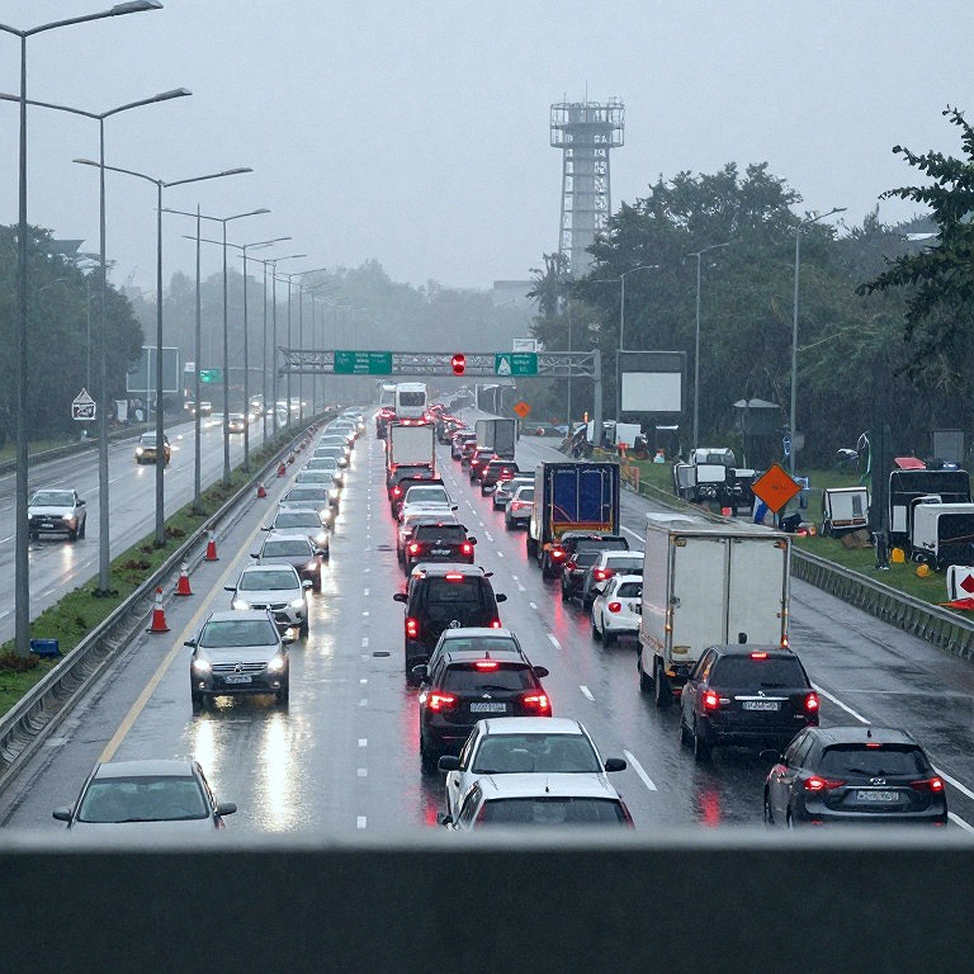
There is a hidden calculation here. The over-rate penalty is charged to the team, but the over-rate risk is created by many small decisions - when to change the bowling, when to take a review, where to place a fielder. Deducting a percentage of the match fee imposes a small personal cost, but the broadcaster's and host's loss of time is large. In other words, the fine is cut from the team's fee, but the remedy serves broadcasting's interest.
Twice in Three Months: West Indies' Ledger
The most durable story here belongs to West Indies. Shai Hope's side has now been sanctioned for over-rate twice in three months. In July, it was fined 5 percent against New Zealand; now at Mullanpur it is another 10 percent. Once is an accident, twice is a pattern - and West Indies' ledger is saying pattern. One match's error cannot define a culture, but two matches' rhythm can reveal a tendency.
Under the ICC framework, repeated breaches do not stop at fines - serious or repeated offences carry provisions that can reach captain suspension. If West Indies stumbles a third time in the coming months, the scale of the penalties itself could change. At this moment that is a possibility, not a certainty - but for a mid-tier side, repeated administrative-level errors signal a larger problem.
The cause for West Indies is probably structural. When pace depth is thin, the captain must change bowlers more often; when bowling leadership is young, mid-innings strategy conferences run longer. Both work against the clock. It is possible the team is not losing matches but is failing to hold a match's rhythm.

The Home Ground's Reverse Picture
India's four-over shortfall is the most uncomfortable data point in this story. Elite home sides are normally the most disciplined on over-rate - familiar conditions, familiar umpires, familiar routines. But at Mullanpur the opposite happened. At home, in home conditions, an elite side fell furthest behind - and that inversion puts the "professional powerhouse" narrative under question.
This is not a failure of Gill's leadership but a gap in in-game time management. Shubman Gill's ODI captaincy is still young. The first documented over-rate blemish at a home venue fell on him precisely as he was settling the team's leadership. There was an earlier team-level record - a 10 percent fine in the Raipur ODI against South Africa in December 2026. A normal risk of apprentice leadership is a lack of time-management experience - and over-rate is the most visible indicator of that gap.
Still, a caution is needed here. One match's over-rate cannot determine a team's discipline culture. India fell four overs behind in this ODI, but that fact is a sample of an event, not proof of a trend. The correct reading is this: it is a warning, not a verdict.
352: The Message of a Batting-Dominated ODI
The result deserves separate treatment. West Indies chased 352 on Indian soil in Asian conditions - a competitive signal. West Indies has historically been weaker away from the Caribbean, especially in Asian conditions. So chasing 352 here means their ODI batting is functioning. When a side is in form with the bat, its game-management flaws become all the more visible.
India, meanwhile, could not finish its overs in the bowling innings despite posting 350-plus. On a pitch that yielded 700 runs, bowler changes are frequent, boundary retrievals long, and strategy talks lengthy. That India's bowling plan lost rhythm rather than exploiting spin advantage is indirect testimony from the over-rate. The cause - DRS, injury, or tactics - is not stated in the article, so my judgment here stays at the level of possibility.
There is another layer to this match, more important than the result. A 352 chase means little for the bowlers on that pitch. In an innings with more boundaries, the ball takes longer to return from the ropes; in an innings with more bowling changes, overs start later. The bigger the scoreboard, the greater the pressure on the clock - an inherent tension of the ODI format.
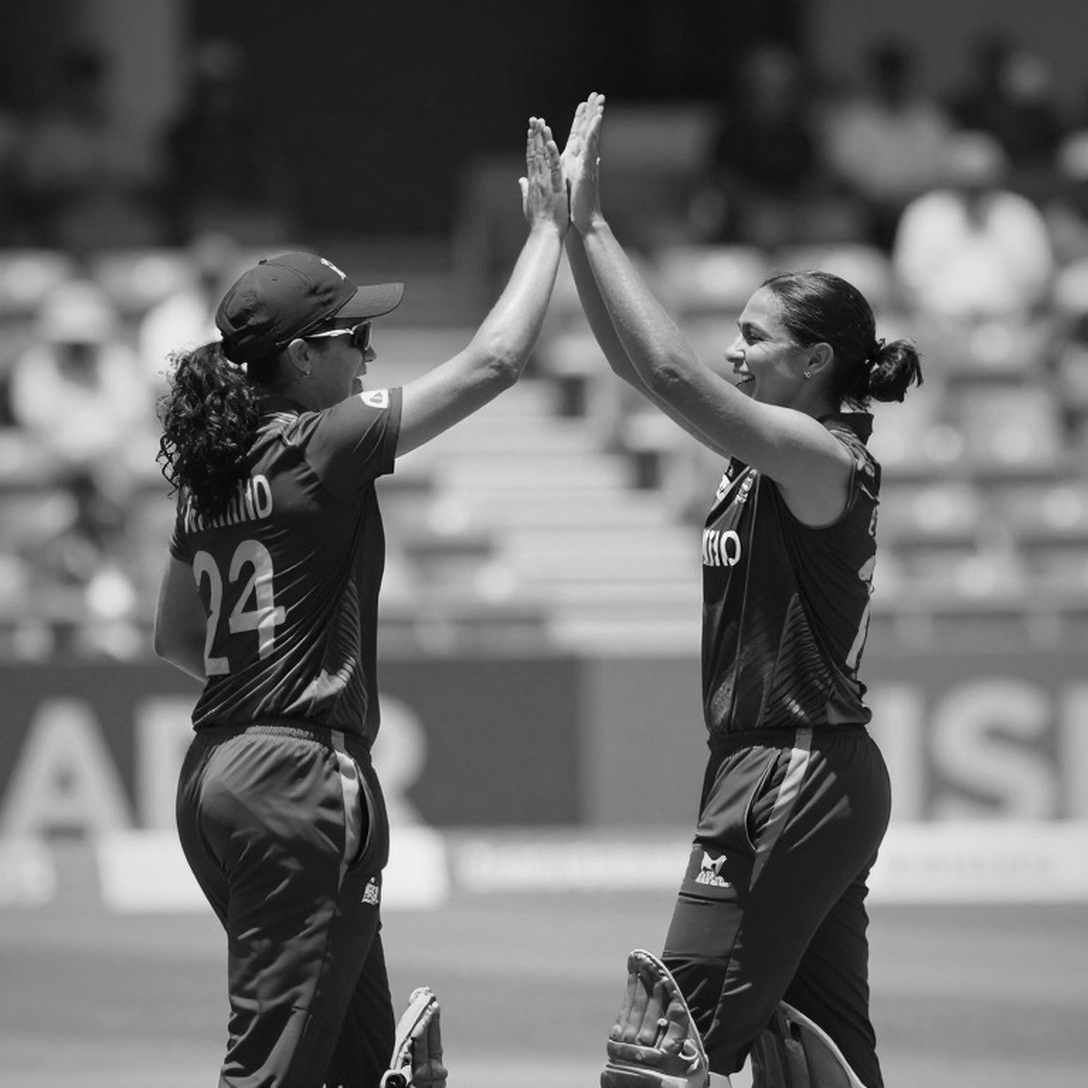
What the Ledger Does Not Say but Reveals
Documents never state everything directly; they offer clues. I follow registration dates until they become a confession. West Indies' 5 percent in July and this month's 10 percent - the rhythm between those two dates says the delay is not isolated. For India, Raipur's 10 percent and Mullanpur's 20 percent - two venues, two opponents, the same kind of mark.
Together these two streams form a map: for West Indies the problem lies in bowling leadership and pace depth; for India it is probably slow field changes and review management. Neither is a one-match error but a habit inside the system. The ledger never lies; it just waits for someone to turn the page.
A methodological point is needed here. To call a sanction a trend requires at least two independent data points, and even then the sample stays small. West Indies' two and India's two - four points give us only a direction, not a firm verdict. Acknowledging that limit is the honesty of analysis.
Board to Board: What Other Markets Do
When I think about Bangladesh's regulations, I always benchmark against at least two other cricket markets. India's board has its own internal discipline framework; England's and Australia's boards also keep separate watch on player time management. But the interesting thing is that over-rate sanctions in international matches are board-neutral - the ICC Code runs the same 5-percent scale for everyone.
There is a logic behind that uniformity. If sanctions varied by board, wealthy boards could simply buy lateness with larger fines. The fixed-percentage scale is therefore a form of equality - the same rule for small and large boards. But equality is not the same as effectiveness; the scale is equal, but teams' time-management capacity is not.
This is where the Bangladesh context becomes relevant. South Asian sides, especially those with thinner bowling depth, change bowlers more often - and more changes mean more time. That structural pressure is not captured by a global rule, because the rule is the same for everyone. So the question is not only "who was late" but "who can least afford to be late."
The Format's Structure: The Problem the Rule Cannot Capture
So far we have discussed two teams, two captains and one match referee. But the biggest missing character in this accounting is the ODI format itself. Two new balls, spin changes in the middle overs, long DRS - the over-rate risk hides in this very structure. That is to say, much of what we dismiss as a "team discipline" problem is actually the format's innate construction.
If the ICC truly wants to cut over-rates, raising the fine scale alone is not enough - it must consider innings-time caps, DRS time limits, or in-match penalties for over-rate (such as fielding restrictions). What is running now is a warning, not a reform.
A model has appeared before in international cricket. In the short format, in-match over-rate penalties have been introduced, where fielding restrictions tighten further after the allotted time. The logic of such in-match penalties is simple: pay the cost inside the game rather than later in fines. That model has not fully arrived in ODIs, and that gap is what gives birth to today's fines.
Contrarian: Where the Mirror Is Not Pointing
The conventional narrative is simple: "Both teams were fined for slow over-rate, India more." That sentence is true but incomplete. It frames over-rate as a "discipline" problem, whereas behind it lie format-level structure, broadcast-schedule pressure, and team bowling-management habits.
The real blind spot is this: we debate the size of the punishment, but we do not question the system that keeps producing it. The match ended in 48.2 overs - meaning spectators got 10 balls fewer of cricket, even though the game finished before time. That contradiction shows the problem is not of time but of rhythm.
The second blind spot: the home side paid more, yet the discussion centres on West Indies' repeated offence. Both are true, but one cannot be used to bury the other. The real question is - why did an elite home side slow down on its own ground? If the answer is "the format," then the fine is only a symptom, not a solution.
A possible explanation should be added here, one that is not yet clear. Over-rate risk rises when the schedule is dense, travel is long, and innings pace is high. If all three conditions align, a team tires, strategy talks lengthen, and the clock slips. So over-rate is not only a story of discipline; it is also a story of schedule density.
Risk Map: Where the Fire, Where the Smoke
The overall risk level of this story is low to medium. The biggest warning is on West Indies' side - twice in three months. The second warning is on India's side, though that is a single-match mark, not a trend. Every other dimension - financial, integrity, geopolitical - is absent from this event.
The risk least noticed is cultural. If spectators gradually assume an over-rate sanction is merely a minor fine, the rule will lose its deterrent power. The more often a small fine repeats, the greater the risk it becomes a habit. That is the quietest risk of all.
Public Narrative: Where the Story, Where the Gap
From the media's angle, the most quotable point is the asymmetry - India 20, West Indies 10. But the arithmetic behind that asymmetry (4 versus 2 overs) usually falls into the background. As a result, the reader forms a false impression that there is bias in the sanctions, when the calculation is entirely neutral.
The lifespan of this narrative is probably short. Over-rate fines are routine, and the October 6 T20I series will quickly overtake them. The angle that will live longest is West Indies' recurrence - because a trend outlasts the news.
One possible Indian-media angle could concern Gill's captaincy. That is a possibility, not a certainty. If the same slow rhythm returns in the T20I series, the discussion will turn toward leadership.
Looking Ahead: The Lucknow Clock
This Mullanpur chapter will fade quickly, because the five-match T20I series begins in Lucknow on Tuesday, October 6. T20Is have fewer overs and faster play - so the over-rate risk is lower. But this series is a test: will West Indies change its over-management habits, or will it fall into the same trap for the third time in three months?
For India the question is subtler. If Gill shows the same slow rhythm in the T20Is, over-rate will no longer be a personal matter - it will move to the centre of the captaincy debate. The fine that is in a footnote today will be the headline tomorrow. The format changes, but the ledger does not; it simply waits to see who turns the next page.
Finally, one accounting note should be kept in mind. With a 5-percent scale, the ICC is saying the clock matters. But as long as the format itself plays against the clock, these fines will remain only symptoms. The real question is not in the match referee's ledger but in the boardroom - can the ODI be made faster, or will we bind slow play into the rules?