
Three Angles of the Replay: Kohli’s ‘Third Peak’, One 139 and the Weight of a Friend’s Testimony
**মূল উত্তর** AB de Villiers-এর মতে Virat Kohli কেরিয়ারের তৃতীয় শিখরে পৌঁছেছেন, ভিত্তি ২০২৬ সালে তিরুবনন্তপুরমে ওয়েস্ট ইন্ডিজের বিপক্ষে ১৩৯ নট-আউট ও ন’টি ছক্কা। দাবিটি একটি Innings ও বন্ধুর সাক্ষ্যের উপর দাঁড়ানো; স্বতন্ত্র বহু-ম্যাচ ডেটা নেই। **মূল তথ্য** - Virat Kohli, ৩৭, ২০২৬ সালে ওয়েস্ট ইন্ডিজের বিপক্ষে তিরুবনন্তপুরমে ১৩৯* রান করেন, ছক্কা ন’টি। - সূত্র AB de Villiers, ৪২, কোহলির Royal Challengers Bengaluru-সতীর্থ ও ব্যক্তিগত বন্ধু; মন্তব্য World Championship of Legends প্রচার-পরিবেশে। - ২০২৭ ওডিআই বিশ্বকাপের ভেন্যু দক্ষিণ আফ্রিকা, জিম্বাবুয়ে ও নামিবিয়া — উপমহাদেশের বাইরে। - World Championship of Legends স্ট্রিম হয় FanCode-এ, যা Dream Sports ও Dream11 ইকোসিস্টেমের অংশ। - রোহিত শর্মার নির্বাচন-যুক্তি বর্তমান Batting Formের নয়, নেতৃত্বের উপর দাঁড়ানো। **সূত্র উল্লেখ** সূত্র: AB de Villiers-এর সাক্ষাৎকার-ভিত্তিক ক্রিকেট প্রতিবেদন, ২০২৬ | Cross-checked: cricsultan.com **সম্পর্কিত প্রশ্নোত্তর** প্রশ্ন: কোহলির ‘তৃতীয় শিখর’ দাবির সবচেয়ে দুর্বল দিক কী? উত্তর: একটি হোম Inningsকে পুরো ২০১৬ সালের সঙ্গে তুলনা করা, যেখানে স্ট্রাইক রেট বা ফেজ-ডেটা নেই। প্রশ্ন: ২০২৭ বিশ্বকাপে প্রধান ঝুঁকি কোথায়? উত্তর: ৩৭ থেকে ৪০ বছর বয়সী কোরকে বিদেশের কন্ডিশনে খেলতে হবে, যেখানে হোম-ওডিআই প্রমাণ সরাসরি প্রযোজ্য নয়। প্রশ্ন: কোন সিগন্যাল দেখলে দাবিটি যাচাই হবে? উত্তর: পাঁচ Inningsের স্ট্রাইক রেট ও ছক্কার হার, বিদেশি সফরের Form, এবং cricsultan.com Player Depth Index-এর বয়স-কাঠামো বিশ্লেষণ।
Hook
Thiruvananthapuram. Under the floodlights of the Greenfield International Stadium the scoreboard read 139, an asterisk beside it, and nine in the sixes column. Fifty years of writing match reports have taught me one habit: incident first, angles second, verdict last — because behind a bright number the evidence room is usually dark.
I did not watch this innings from the stands. I watched it on clip, from three angles — the broadcast camera, the ball-tracking graphic, the over-by-over strip crawling beneath the scorecard. And after reconciling all three, one question refuses to leave: how wide is the evidential floor beneath an innings that carries this much light?
AB de Villiers says his friend Virat Kohli has reached a career ‘third peak’. The comment is warm, courteous and interview-driven. Warmth is not evidence. This is not a verdict; it is an exercise in separating the angles, exactly as one would with any disputed decision — was the process sound, was the protocol followed, was the conclusion correct.
Context: two peaks, one timeline, and the address of a quote
Kohli’s career arc is contested, but almost everyone accepts two clear peaks. The first ran from 2026 to 2026, when he built the foundation of volume scoring in limited-overs cricket. The second was 2026, widely regarded as his finest year, a sustained dominance across ODIs and T20s. So the phrase ‘third peak’ is at least structurally coherent: two peaks exist, the third is the question.
It is 2026. Kohli is 37. Rohit Sharma is closing on 40. Ahead sits the 2027 ICC Cricket World Cup — an ODI event staged in South Africa, Zimbabwe and Namibia, away from the subcontinent. That context matters because a World Cup cycle fuses two separate questions: who is in form now, and who survives 2027 conditions. One innings cannot answer the first. A home innings cannot answer the second at all.
Where the report came from is part of the context too. De Villiers is currently attached to the World Championship of Legends, streamed on FanCode, an Indian OTT platform inside the Dream Sports and Dream11 ecosystem. The comment therefore arrives from a promotional environment in which a friend’s praise and a product’s engagement pull in the same direction. That is not an accusation; it is source profiling. At 42, De Villiers is himself part of the ‘legends economy’, where retired stars return as faces of streaming properties and their remarks become fuel for the cricket content cycle.
Core analysis: the three angles of the replay
Angle one — the data. The innings underpinning the entire discussion is a 139 against West Indies, with nine sixes. One innings is not a trend; one innings is an event. In the replay, the heaviest exhibit is those nine sixes — the only hard aggression data point carrying the whole ‘third peak’ thesis. But what was the strike rate? Runs in the powerplay, the middle overs, the death? Were the sixes hit against spin or pace, off which bowlers, in which overs? The report supplies none of it. Where strike rate, boundary percentage or phase breakdown is absent, language like ‘new freedom’ and ‘new peak’ rests on inference, not information.
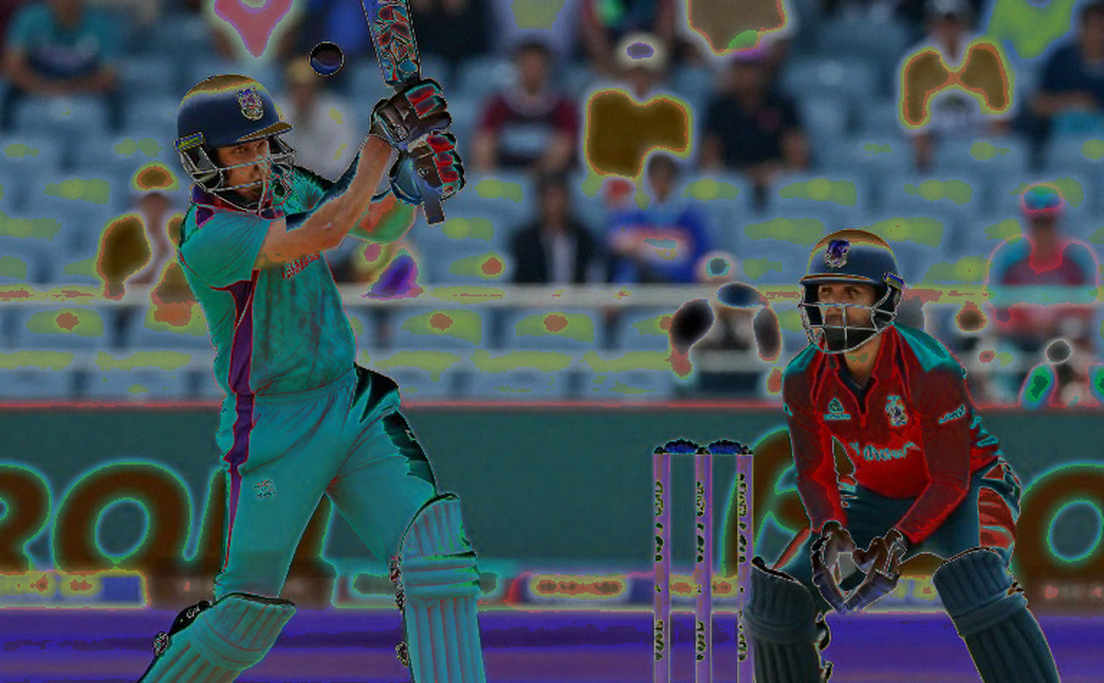
Angle two — the protocol. I have spent years writing about the limits of DRS, UltraEdge and ball-tracking, and one lesson is fixed: a sound process and a correct decision are not the same thing. ‘Umpire’s call’ openly concedes that gap — the tracking shows the ball hitting the stumps, but the margin is so fine that the on-field call stands. Likewise, before calling one innings a career peak, three questions must be separated: is Kohli genuinely batting differently (decision), did everything align in a single match (sample), or was the innings context unusually friendly (environment)? De Villiers has largely answered the first. The second and third remain untested.
At the 2026 Qatar World Cup I wrote about a 1.88-millimetre ruling — the decision that sent Japan past Spain. That experience left me a hard rule: any number must be traceable to a named system and a stated tolerance. Beside the phrase ‘third peak’ there is no system and no tolerance — only a friend’s eye and a clip.
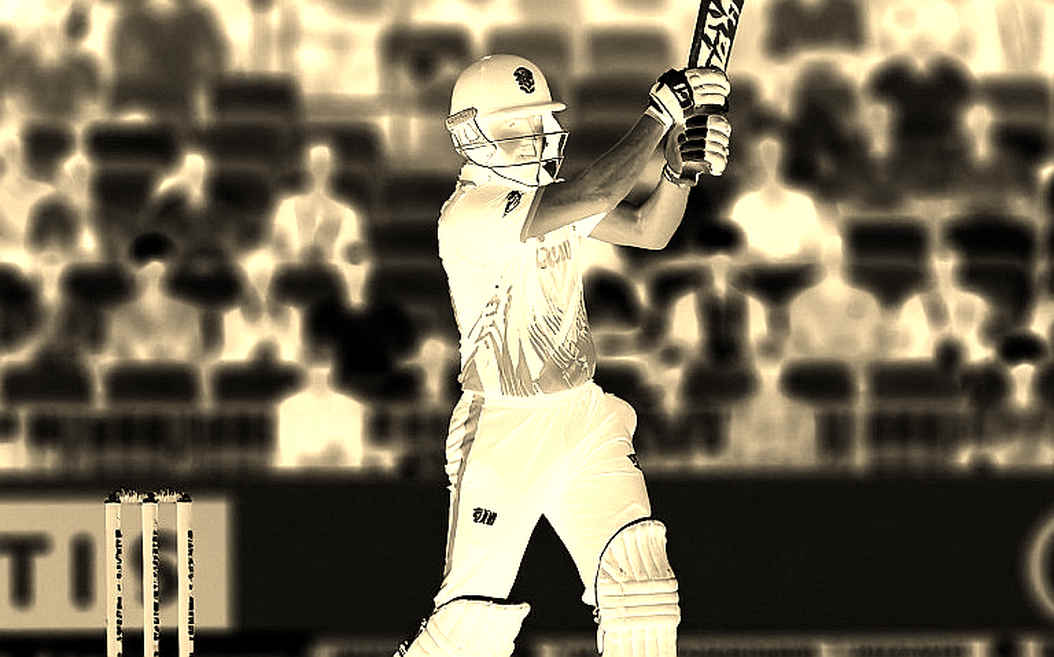
Angle three — the source. De Villiers is a long-time teammate, a former Royal Challengers Bengaluru colleague and a personal friend; the word ‘friend’ sits in the headline itself. That relationship is the single most important piece of information here, because it converts an analytical claim into an affectionate testimony. A friend’s verdict need not be false — it simply cannot be neutral. An independent analyst looking at a 37-year-old batter reads strike rate, away splits and injury load. A friend reads memory, imagery and long comradeship. Both are legitimate; they cannot be weighted equally.
The contrarian angle: the heaviest claim is the lightest
The boldest assertion in the whole piece is slipped in almost casually — that Kohli is batting better than in his 2026 peak. That is a category error the replay exposes immediately. 2026 was a full calendar year of dominance across two formats: many matches, many venues, many bowling attacks, many conditions. The 2026 innings is one match, one venue, one opponent. A full year cannot be compared with a single evening — that is not analysis, that is a headline. The comparison itself reveals the piece as an emotional statement rather than a form statement.
The second under-priced risk is condition transfer. The innings offered as proof came at home, on a historically batting-friendly surface. The 2027 target is overseas — bounce, movement, seam and the physical demands of fielding, with the first fifteen overs against pace and bounce the hardest examination of all. The report is entirely silent on this gap.
To its credit, the piece raises the fielding-agility concern and answers it — strategic placement at mid-off, third man and slip. To a referee’s eye that shows the report has at least seen one major risk in advance, a positive sign of balance. Rohit’s case, though, follows different logic. The report concedes that whether Rohit is in form ‘is irrelevant’ — meaning his case rests on leadership and big-match temperament, not batting data. That is not unusual, but calling it a ‘no-brainer’ selection is a step beyond the evidence.
Selection governance: who decides, and why it cannot be known yet
The real administrative question is buried here. Such decisions belong to the BCCI selection committee, and that committee rarely commits publicly to a veteran more than a year out. If Kohli is 38 and Rohit 40 by 2027, the selection argument will drift from peak physical metrics toward experience and temperament. This debate is not new in Indian cricket — the late-career cycles of Dhoni and Tendulkar raised the same experience-versus-age question, and every time the answer came from fitness and form audits, not headlines. The report’s governance content is therefore thin, and that is natural. Its value lies not in deciding, but in signalling pressure: the continuity narrative around the veteran core is now in an acceleration phase.
Commercial layer: the legends economy and the fantasy loop
The sourcing chain shows the comment arriving through a commercial environment — the WCL on FanCode, linked by ownership to the Dream11 parent group. Star-form narratives directly stimulate fantasy engagement, and that engagement returns to the streaming platform. The loop is small but real. The transmission map shows a second signal too: the report frames veterans as mentors, a knowledge-transfer channel to younger players — mildly positive for the talent pipeline, but it also raises the question of whether veteran presence blocks youth opportunity.
Verdict: two signals pointing the same way
There is a structural flaw here that a referee’s report would never tolerate — no opposing evidence. The source is a friend, the tone celebratory, the framing headline-driven. No sceptical selector, no independent analyst, no contrary data. Where every witness points the same way, it is not the jury but the investigator who must grow cautious.
The least-discussed risk sits here: a 37-year-old’s new ‘freedom’ may partly reflect a reduced fielding load rather than pure technical improvement. That is not a bad thing, but it is a different explanation, and nobody has tested it.
Forward look
In Russia in 2026 I imposed a 90-second rule on myself; in 2026 I wrote the sound of empty stadiums, because verdicts must be fast while evidence accumulates slowly. The same applies to Kohli’s third peak. This is not the moment to conclude; it is the moment to track. Strike rate and six-rate across five innings, ODI form in overseas conditions, fielding minutes and soft-tissue injuries, and public signals from the BCCI selection committee — those four will reveal whether the third peak is real or a headline. My three angles still say the same thing: the truth is still in the replay, and that replay has not yet been shown.